
Large buildings are no longer just architectural landmarks. With the right visual technology, façades, towers, malls, and commercial buildings can become powerful digital platforms for branding, advertising, entertainment, and public engagement.
Two technologies often considered for large-scale building displays are giant LED screens and projection mapping. Both can transform the appearance of a building, but they work in fundamentally different ways.
So, which makes more sense for large buildings?
The answer depends on your objectives, building characteristics, content requirements, installation conditions, and long-term usage. This guide compares giant LED displays and projection mapping to help businesses, property owners, event organisers, and developers make the right decision.
What Is a Giant LED Display?
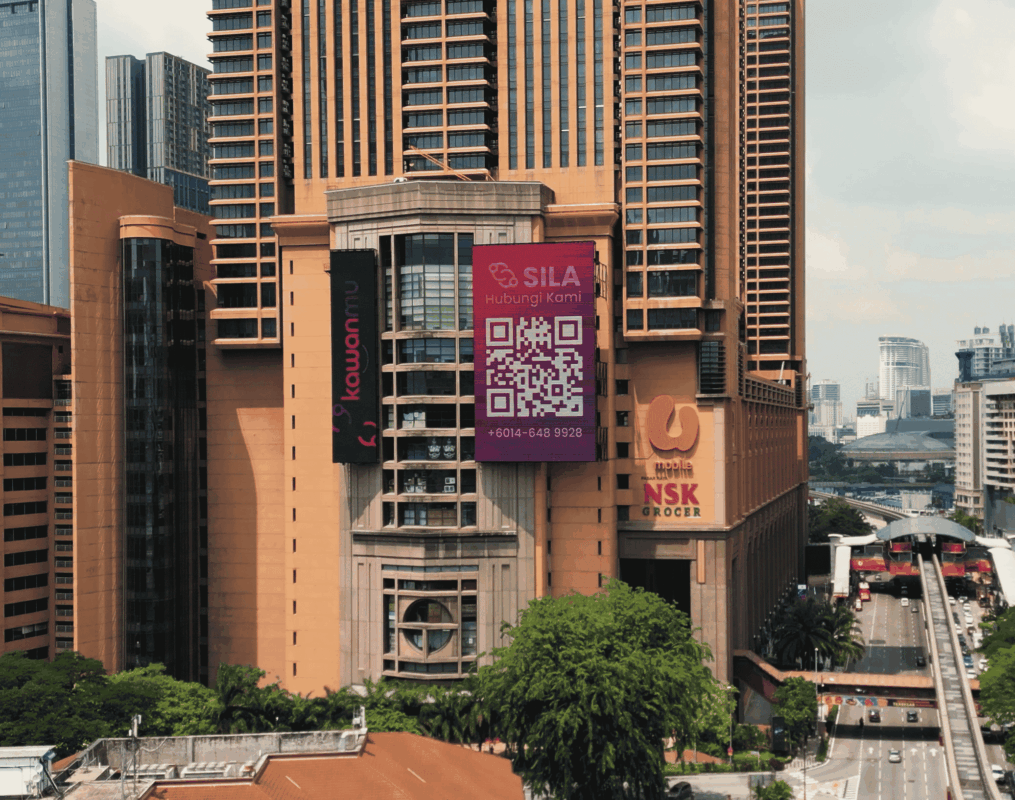
A giant LED display is a large-format digital screen made up of individual LED modules or cabinets. These modules can be assembled into extremely large displays and installed on building façades, rooftops, commercial structures, and other architectural surfaces.
Unlike conventional indoor LED screens, outdoor giant LED displays are designed to withstand demanding environmental conditions. Depending on the specification, they can offer high brightness, weather resistance, high refresh rates, and excellent visibility from long distances. The biggest advantage is that the screen itself becomes a permanent digital asset capable of displaying different content throughout the day.
A good example is the Giant LED Façade Billboard at Berjaya Times Square. The project covers more than 770 square metres and was engineered as a long-term commercial digital asset, incorporating high brightness, outdoor protection, centralized content management and 3D-ready capabilities.Giant LED displays are commonly used for:
- DOOH advertising (Digital out-of-home)
- Building façade advertising
- Brand campaigns
- Sports and live event broadcasts
- Corporate communications
- Entertainment and public events
- Architectural digital displays
- Permanent media façades
What Is Projection Mapping?
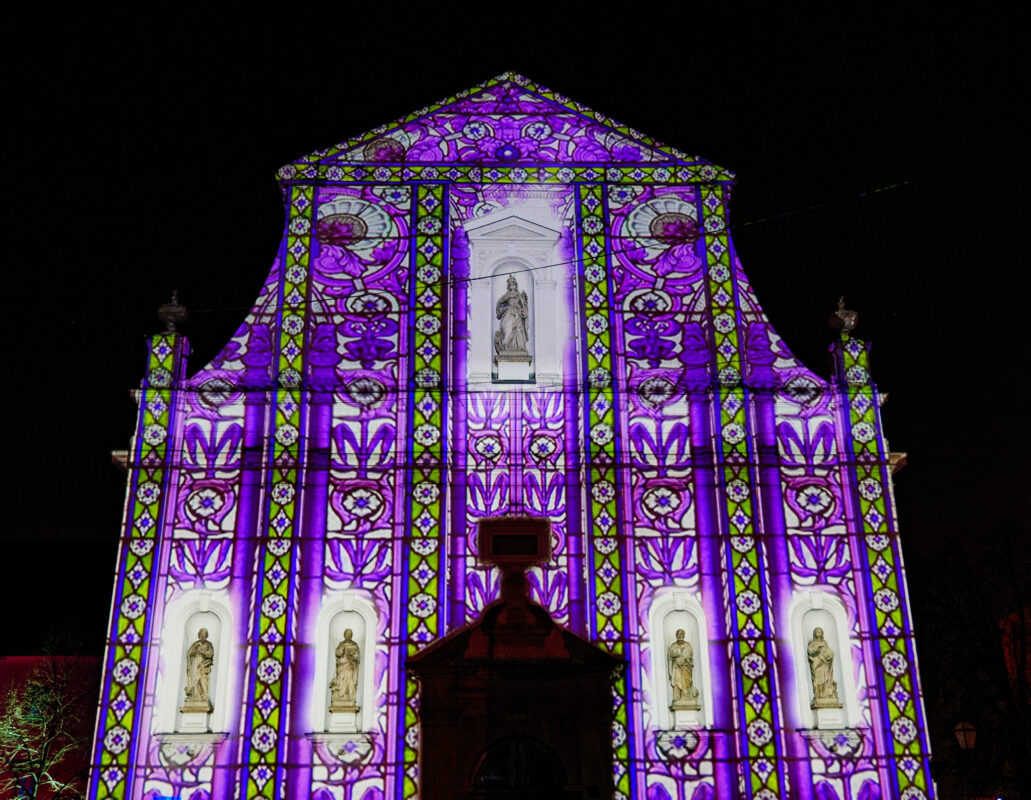
Projection mapping, also known as architectural projection mapping, uses high-powered projectors to display visual content directly onto the surfaces of buildings and structures.
Instead of installing a physical screen, specialised software maps the projected image to the building’s architectural features. The content can therefore appear to interact with windows, columns, walls, curves, and other structural elements.
Projection mapping can make an ordinary building appear to move, transform, break apart, or change its architectural form through carefully designed animation.
Projection mapping is particularly effective for temporary experiences such as:
- Product launches
- Festivals
- Cultural events
- Brand activations
- Opening ceremonies
- Concerts
- Architectural storytelling
- Special celebrations
Giant LED vs Projection Mapping: Key Differences
Although both technologies can create spectacular visual experiences, their strengths are different.
| Factor | Giant LED Display | Projection Mapping |
|---|---|---|
| Display Method | Physical LED modules assembled into a large digital screen | High-powered projectors cast visuals onto a building’s surface |
| Daytime Visibility | Excellent with high-brightness outdoor LED | Limited by sunlight and ambient lighting |
| Night-time Performance | Excellent | Excellent, especially in dark environments |
| Weather Dependency | Low when using properly rated outdoor LED | High; rain, fog and moisture can affect projection |
| Permanent Installation | Highly suitable for long-term applications | Generally better suited to temporary installations |
| Temporary Events | Suitable | Excellent for events and special activations |
| Content Flexibility | Very high; supports videos, advertising, live feeds and animations | Very high; especially effective for architecture-specific visuals |
| Architectural Integration | Requires physical mounting or integration into the building | Uses the existing building façade as the projection surface |
| 3D Visual Effects | Possible with anamorphic and naked-eye 3D content | Excellent for architectural illusions and visual transformations |
| Advertising Potential | Excellent for DOOH and billboard advertising | Better suited to one-off campaigns and experiential advertising |
| Long-Term Commercial Use | Excellent; can operate as a continuous digital media asset | Less practical for continuous commercial operation |
| Maintenance | Requires LED module, cabinet, power and control-system maintenance | Requires projector, lens, alignment and supporting equipment maintenance |
| Operating Environment | Suitable for both indoor and outdoor applications depending on specification | Primarily dependent on suitable lighting and environmental conditions |
| Best Use Case | Permanent digital billboards, building façades, DOOH and commercial displays | Product launches, festivals, architectural shows and special events |
| Main Advantage | High visibility, reliability and long-term commercial value | Immersive storytelling and architectural visual effects |
Giant LED or Projection Mapping: Which Should You Choose?
There is no universal winner.
Choose Giant LED if you need:
- A permanent digital display
- Strong daytime visibility
- Continuous advertising
- DOOH media opportunities
- Frequent content changes
- Live video or broadcast capabilities
- Long-term commercial use
- Reliable outdoor operation
- A digital landmark for a building
Choose Projection Mapping if you need:
- A temporary installation
- An event-based experience
- Architectural storytelling
- Immersive visual effects
- A product launch spectacle
- A festival or celebration
- Creative use of existing architecture
- High-impact nighttime experiences
Can Giant LED and Projection Mapping Work Together?
Yes. In some projects, the best solution may not be choosing one technology over the other.
A large building could use a permanent giant LED display for everyday advertising and communications while incorporating projection mapping for special events.
For example, a commercial tower could operate its LED façade throughout the year and use projection mapping during a major product launch or festive celebration.
This hybrid strategy allows the building to function as both a long-term digital media asset and an event-based experiential platform.
For projects requiring a wider combination of display, sound, lighting and control technologies, an integrated Professional AV system can help bring these technologies together as part of a larger audiovisual environment.
Final Verdict
When comparing giant LED vs projection mapping for large buildings, the right choice depends primarily on the intended purpose.
If the goal is a permanent, highly visible and commercially useful digital display, giant LED is generally the more practical solution.
If the goal is a temporary, immersive and visually spectacular architectural experience, projection mapping can be the better choice.
For building owners and developers, the decision should go beyond visual impact. Factors such as building structure, viewing distance, daytime visibility, weather conditions, content requirements, installation requirements, operating costs and long-term commercial value should all be evaluated.
Ultimately, the best large-building visual solution is the one that aligns the technology with the building’s business objective, audience and long-term strategy.
How to Choose the Right Kiosk Solution: Hardware, CMS and Integration Checklist
Discover how to choose the right kiosk solution, covering hardware, CMS, system integration, security, connectivity and scalability.

How Professional AV Systems Enhance Event Experiences
Improve sound, visuals, and audience engagement through professional AV systems to elevate your event experience.

How AV Over IP Solutions Are Transforming Corporate AV Systems in Malaysia
AV over IP solutions are transforming corporate audio visual systems with scalable, cost-effective, and network-based AV integration.
The Rise of Wayfinding Kiosks: A Must-Have Navigation Solution for Malls, Hospitals and Public Spaces
Interactive wayfinding kiosks in malls, hospitals, and public spaces are revolutionizing navigation with smart technology. Here’s why.
The Growing Role of Large-Format Digital LED & LCD Displays in Modern Business Environments
Explore how large-format LED and LCD displays are transforming business environments from boardrooms to retail spaces.
Renting vs Owning LED Displays in Malaysia: Which Option is Right for Your Business?
Compare costs, flexibility, maintenance, and ROI to choose the best solution for events, digital signage, and digital billboard advertising.